


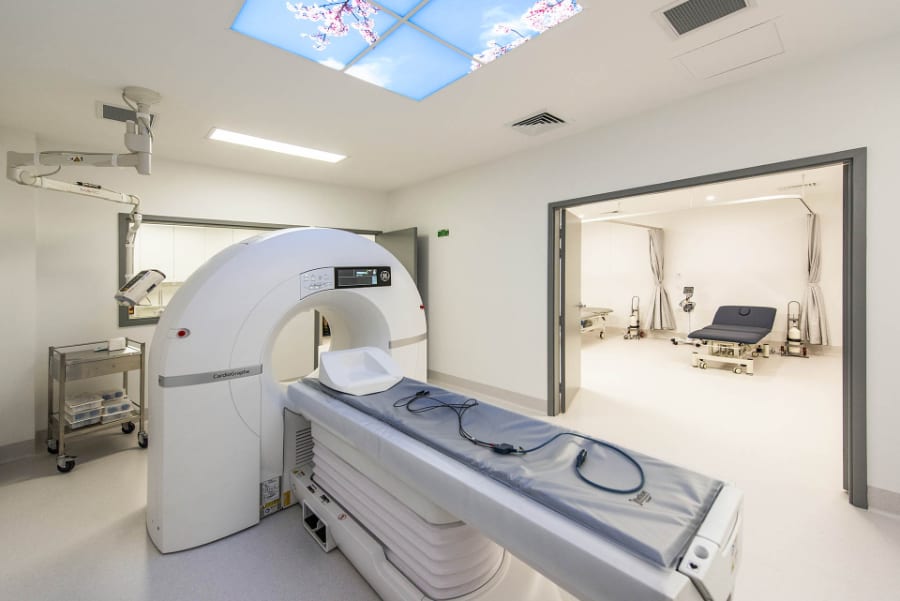
Designing a successful medical or dental clinic goes well beyond aesthetics—it’s about creating an inviting, efficient, and safe environment grounded in evidence-based standards.
Patient Flow, Zoning & Privacy
The separation of clean and dirty workflows along with clear personnel traffic flow and acoustic control helps reduce stress and minimise errors. Thoughtfully zoned areas enhance operational efficiency while offering patients a sense of comfort and discretion.

Waiting Area – Westside Gastroenterology Medical Fitout
Accessibility
Ensuring compliance with accessibility design requirements delivers inclusive, functional spaces for all users. Accessible features not only meet legal requirements but also foster an environment where every patient feels valued and supported. (1,2)

Accessible Bathroom – Baldivis Family Medical Centre
Lighting for Clinical Accuracy
Correct clinical lighting supports accurate assessments—like tissue evaluation and colour judgment—while also minimising eye strain. Fine-tuning lighting to meet the Cyanosis Observation Index (COI) further aids in detecting health conditions reliably. (3)
Infection Prevention
Design that aids cleaning and limits cross-contamination significantly boosts patient safety. Following recognised infection prevention guidelines and standards for medical device reprocessing builds confidence among staff and patients alike. (4,5)
Air Quality & Ventilation
Good mechanical ventilation reduces airborne contaminants—especially critical for aerosol-generating procedures like dental work. Improved ventilation enhances comfort, reduces odours, and supports long-term wellbeing for everyone in the clinic. (6)

Nurses Station – Reynolds Road 7 Day Medical Centre
Electrical Safety in Patient Areas
Safe electrical installation ensures reliable operation of medical devices and equipment. This enhances clinic reliability and reduces downtime. (7,8)
Radiation Safety for Dental Imaging
Applying dental radiation safety guidelines ensures safe imaging suites. Proper shielding protects patients and staff, while maintaining regulatory compliance. (9)

Dental Circle Fitout – X-Ray Machine in Background
Flooring & Slip Resistance
Using slip-resistant flooring lowers fall risk. Seamless, durable surfaces also support infection control and long-term maintenance—especially beneficial for staff moving equipment or supporting mobility-challenged patients. (10)
Attention to Detail
Elements like ergonomic cabinetry, hands-free fixtures, and acoustic treatments enhance comfort and efficiency. These small touches can cumulatively elevate the patient and staff experience. (11)

Consult Room – Western Australian Gynae & Surgery
Summary
The interior designers at TKO Fitouts are familiar with, and constantly apply the following when designing healthcare facilities:
- Australasian Health Facility Guidelines;
- relevant Australian Standards;
- the Building Code of Australia (BCA) as part of the National Construction Code (NCC) 2022; and
- other applicable legislation.
This article is designed to give you an overview of some of the most significant considerations to allow you to come up with an outline for your healthcare facility. The TKO designers can then help you turn your vision into reality, resulting in a facility that is elegant, efficient, and, most importantly, safe.
They can be contacted on (08) 9347 1800, or by email at [email protected].
References:
- AS 1428.1 – Design for Access and Mobility
- National Construction Code (NCC)
- AS/NZS 1680.2.5 – Interior Lighting for Hospitals and Medical Tasks
- NHMRC – Australian Guidelines for the Prevention and Control of Infection in Healthcare
- AS 5369:2023 – Reprocessing of Reusable Medical Devices
- AS 1668.2:2024 – Mechanical Ventilation in Buildings
- AS/NZS 3000 – Wiring Rules
- AS/NZS 3003 – Electrical Installations for Patient Areas
- ARPANSA – Radiation Protection in Dentistry
- AS 4586 – Slip Resistance of New Pedestrian Surfaces
- AS/NZS 2107 – Acoustics: Recommended Design Sound Levels and Reverberation Times